Veggie recipe catch-up

We get our CSA veggie boxes every other week, but I haven’t been keeping up with the regular updates. So here are some iPhone pics of some yummy things I’ve been making lately with our local bounty.
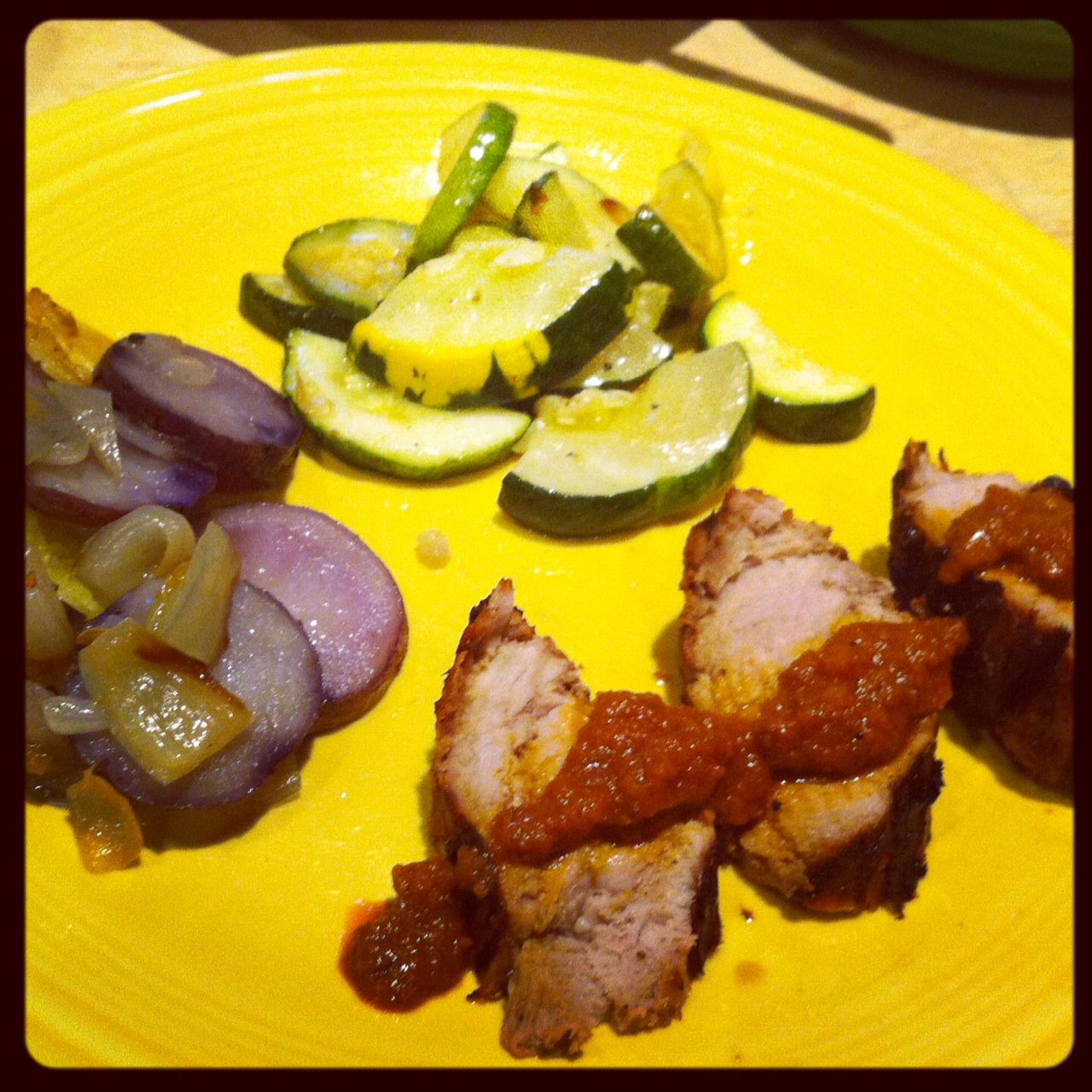
Grilling night – I marinaded a pork tenderloin in some barbecue sauce we got from a local guy at the farmer’s market, and we put extra sauce over the top. I put purple peppers, onions and purple potatoes in a foil wrap for the grill. We ran out of grilltop space, so I roasted the mixed squash in the oven. CSA ingredients: peppers, onions, potatoes, squash. I think the purple potatoes are especially fun.
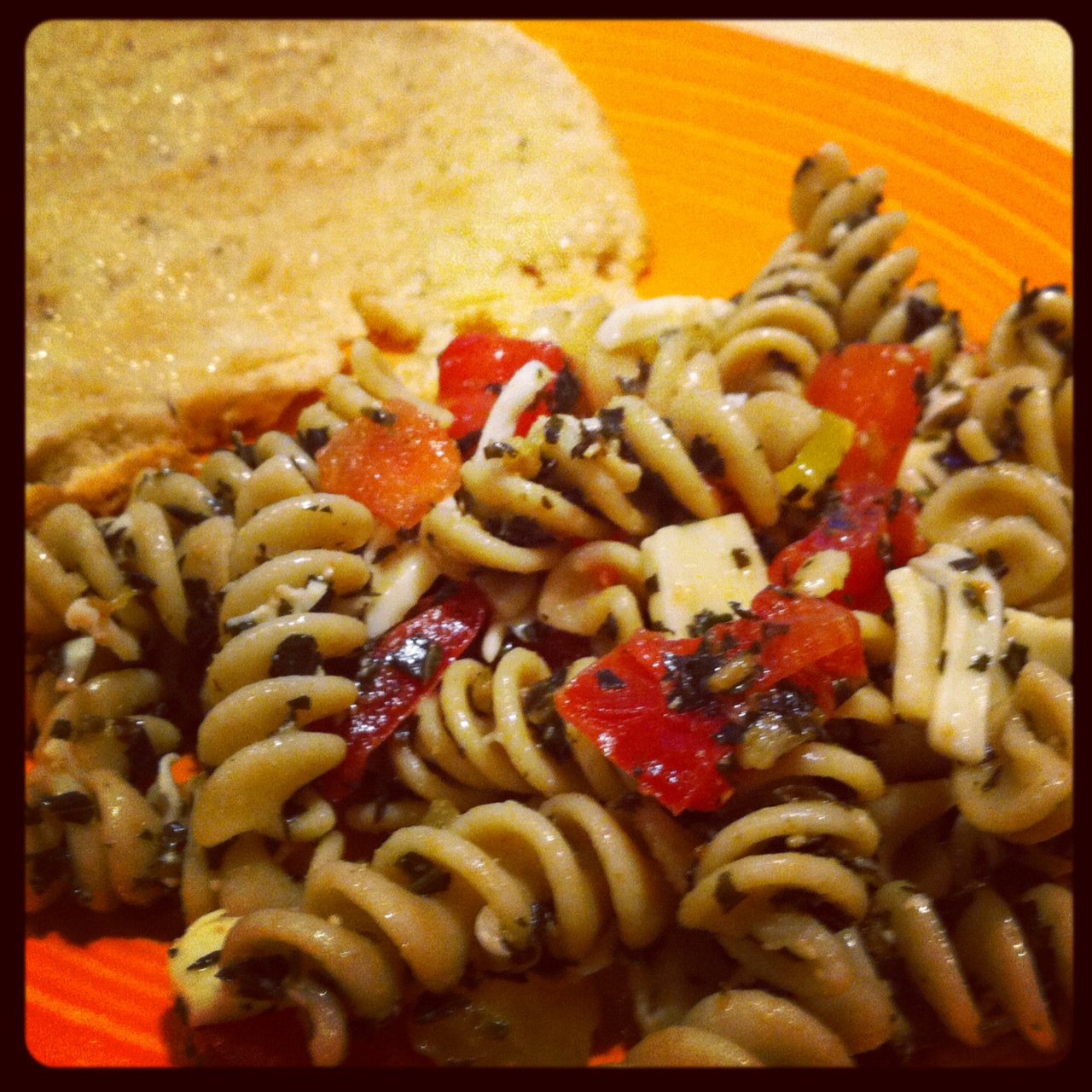
This was simple and tasty – pasta salad with whole wheat rotini, heirloom tomatoes, cheese and pesto. I also finally got something to work out with the bread machine I’m experimenting with, so the edible bread was a big victory. CSA ingredients: tomatoes, basil.

Pickled okra – No picture for this. I feel like there are only so many things you can do with okra. Like beets, they seem to have limited possibilities, so several weeks of them tend to stretch my creativity. But I adapted this recipe to what I had on hand with tasty results. CSA ingredients: okra, hot peppers.

Greek pitas – We love gyros, and I found an easy homemade substitute. I just season ground beef with cumin, garlic and oregano for a similar flavor. We put it in a pita with tomatoes, cucumbers and onions and added feta. On the side, I made hummus with kalamata olives to go with pita chips, and I sauteed green beans. CSA ingredients: tomatoes, cucumbers, onions, green beans.
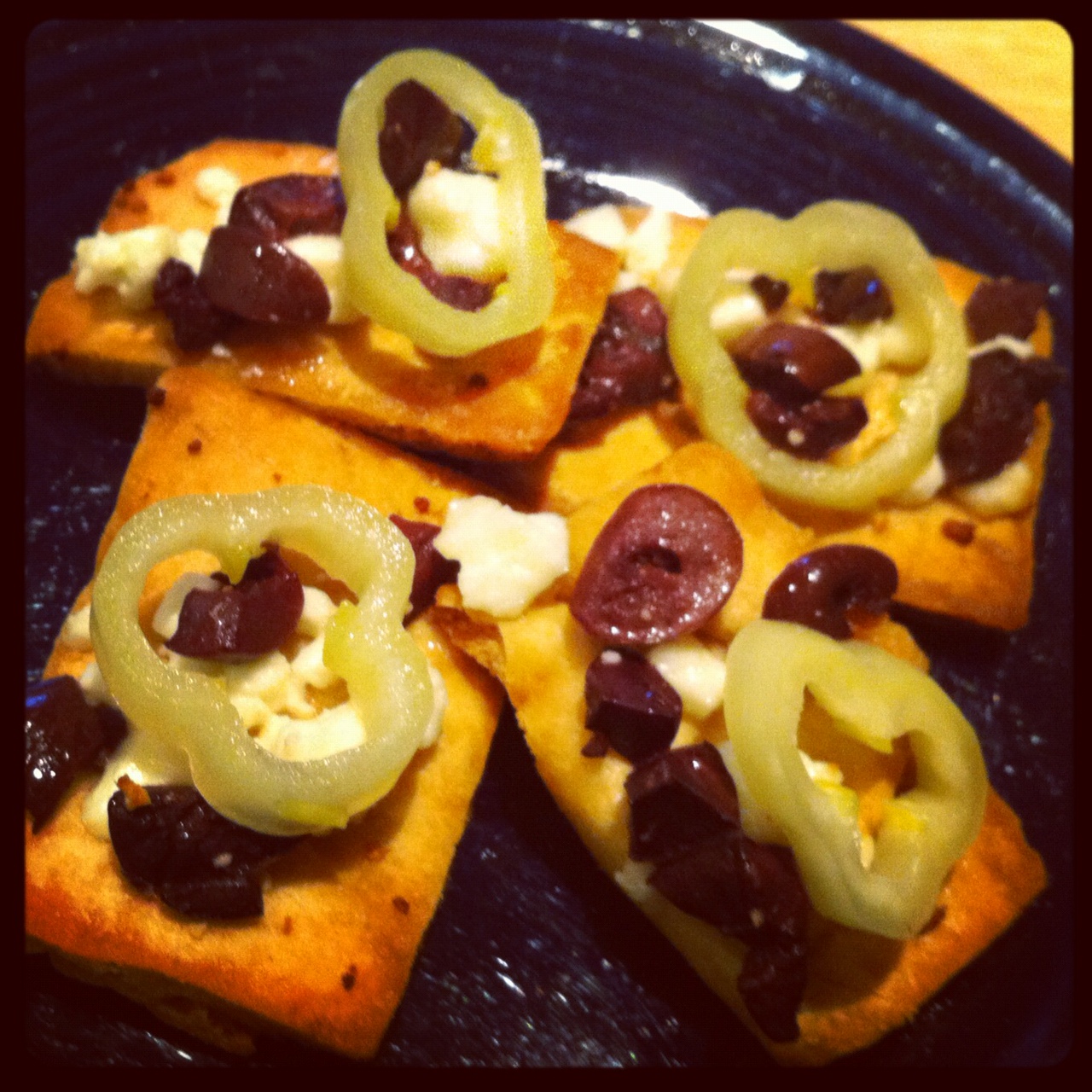
Greek nachos – To use up some of the leftovers from the pitas, I made up “nachos” for a fun appetizer for another meal. I laid out pita chips and covered them with feta and kalamata olives. After they were slightly baked, I topped them with some pickled banana peppers. Yum! Hannah really liked these. CSA ingredient: banana peppers.

Salsa – I don’t have a picture for this either, but one week we had huge portion of tomatoes. This was a little difficult initially because Brett does not like tomatoes. Then my friend Meghan suggested salsa – duh! I can’t believe I missed the obvious with my fridge full of tomatoes, peppers and onions. I made a huge batch, and after we’d eaten it fresh for several meals, I cooked the rest and bagged it for the freezer. This was my first attempt at freezing homemade salsa, so I hope it turns out well.
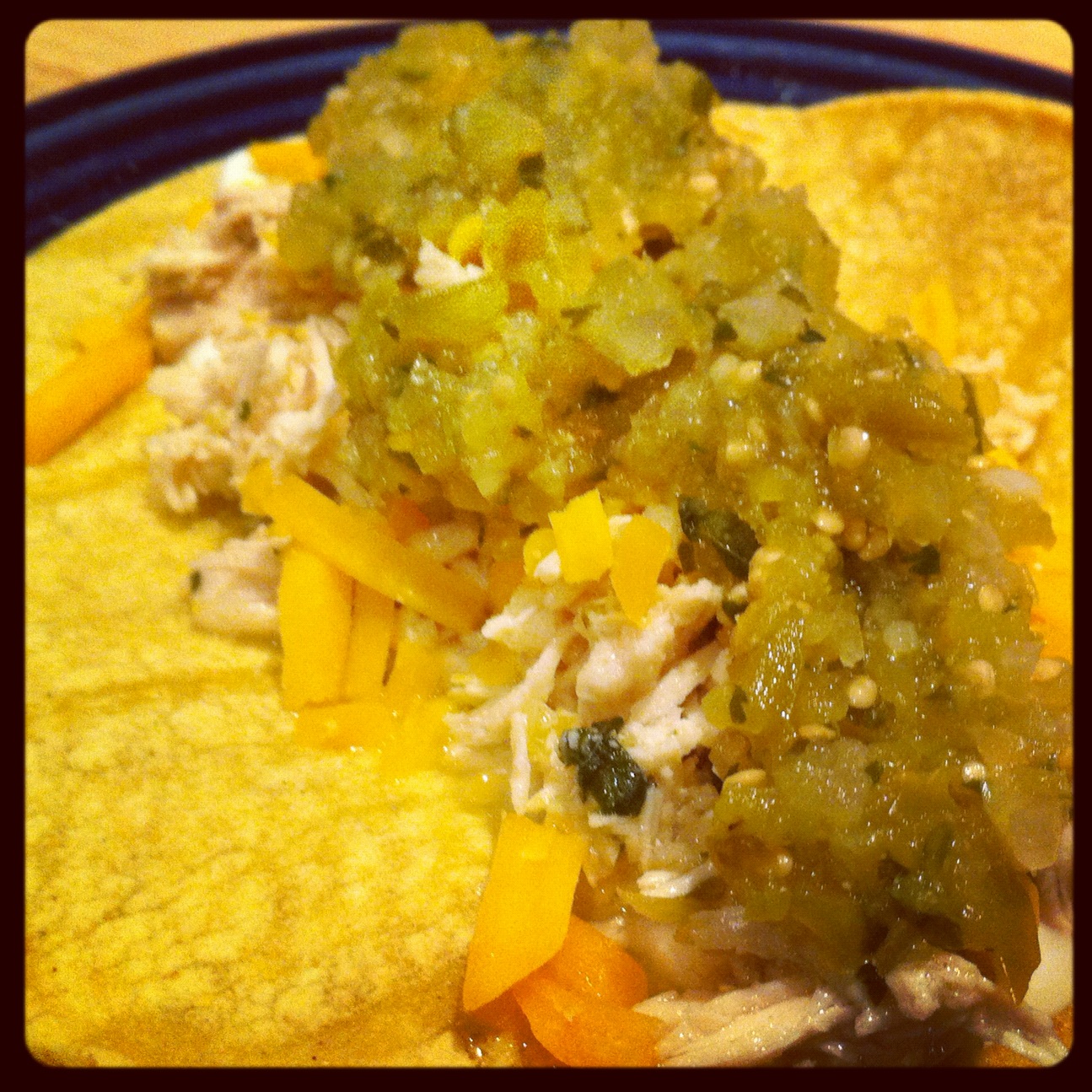
Chicken tacos with verde salsa – I made my favorite shredded chicken in the slow cooker. For the roasted verde salsa, I borrowed this recipe from Tyler Florence. Hannah is literally inches away from me for most of my kitchen adventures, and I give her as many projects as possible. I found that husking tomatillos is an awesome job for a 2-year-old. It was very easy but gave her quite a sense of accomplishment. We assembled the tacos on corn tortillas with sour cream, chicken, cheese and verde salsa. This is one of Brett’s new favorites. CSA ingredients: tomatillos, onions.
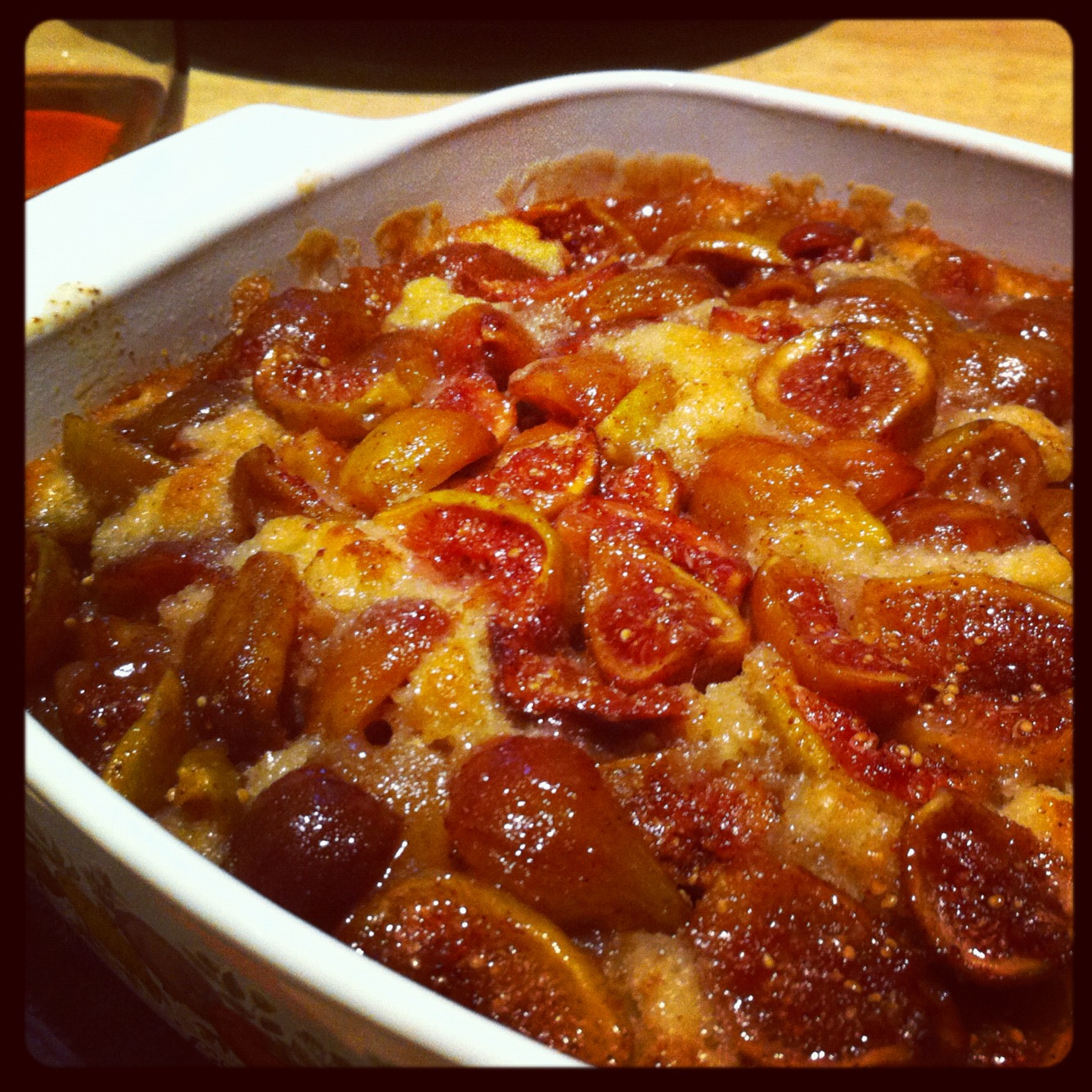
We have a neighbor who has a small “farm” in his backyard and also manages a larger farm outside of town. They were experiencing a plethora of figs, so this generous neighbor came over with a basket. This was a totally new ingredient for me! And, I’m not gonna lie, my only experience eating figs so far in my life was Fig Newtons which probably doesn’t really count. With the help of Google, I found a website called Israeli Kitchen with a recipe for Fresh Fig Cobbler. I made a half batch, and it was gone quickly. It would probably be amazing with ice cream, but we didn’t have any on hand.

So there are a few of the recipes and meals I’ve been making with some of our local ingredients. One of the biggest fans of “veggie day” in our house is Hannah. She goes with me to pick up the box and can’t wait to see what we get each time. I told her today is another veggie pick-up day and asked her what she thought might be in the box. She answered excitedly, “Squash and peppers and squash and purple peppers and red peppers and spicy peppers…”

What have you made lately with your local produce?
Eating real food in the ’80s

Guest writer Joyce Jordan – who raised good eaters on real food

Imagine a trip to the grocery store and there are no clamshells of arugula, no brown rice, no soy milk, no reduced fat products, no high fiber pastas, no microwavable bags of veggies, no whole wheat tortillas or English muffins, no fresh fish and no organic products at all. That’s just the tip of the iceberg (which, by the way, was generally the only kind of lettuce available).

Don’t feel like you went back to 1850, you simply returned to the early 1980s.

For those of us who wanted to venture into the world of healthier eating, we had to seek out unusual sources and create our own products. Finding whole grains in Lawrence, KS meant a trip to the Community Mercantile (known locally as the Merc). Back then it was a cramped and dark little establishment, run by creepy hippie types with debatable standards of cleanliness. If you really wanted that brown rice or whole wheat flour, you just had to get past the weirdness of the place.

Finding recipes meant searching out books like More With Less, Laurel’s Kitchen, and various Jane Brody cookbooks. These books unlocked the secrets of a world of whole grains, beans, granola, scratch cooking and new approaches to vegetables. If I wanted my children to have applesauce that didn’t contain sugar, then I needed to make it myself. If I wanted my family to eat whole grain pancakes, tortillas or English muffins, then I needed to make them. If I wanted lower sugar strawberry jam with no artificial colors, then I needed to make it. Plain nonfat yogurt necessitated the purchase of a yogurt maker.

The intrepid adventurers seemed to find each other, and we renegades banded together and shared what we were learning. Some people accused us of living in the past, but we were convinced that we were moving into the future.

The events of the last 30 years would prove us right.

Bookshelves and the internet are now filled with healthful recipes. Brown rice is sold on the same shelf as white rice – it isn’t even necessarily relegated to the “health food” section of the grocery store! Getting enough fiber is now a mainstream subject and not a topic that is discussed only in private. The Merc is now a beautiful, large, clean, well-lit grocery store where anyone can shop comfortably. Organic meats, fruit and veggies are sold everywhere.

When I see foodie friends from the 80s, we all laugh and wonder where we found the TIME to make all of those things! Most of us had small children, and several of the moms worked part time. Our conclusion is that we were so committed to what we were doing, that not doing it simply wasn’t an option.

No regrets!

Lazy updates

If I had more energy, I’d make these into separate posts with fun pics. But you get bullet points instead.

– Bye to Bingley – In an attempt to simplify our life in preparation for family growth, we have decided to re-home the dogs. My parents graciously offered to welcome Bingley as a friend for their dog Rocky, so we took him up with us on our Kansas trip. We are getting good reports about the adventures of Bingley and Rocky. It was sad to say goodbye, but we know he is happy with a huge yard and a friend. We are still looking for a new home for Leia; let us know if you are interested.

– New wheels – We loved our Honda Pilot, but the automatic sliding doors of the minivan lured us to the official family vehicle. It is a 2007 Honda Odyssey, and we are in love! Good thing since I’ll probably be driving a minivan for the next 20 years or so.

– Baby update – I’m now 26 weeks along, finishing up the second trimester. The pregnancy tracker iPhone app says that my baby this week is the size of a cucumber, 15 inches long and 2.2 lbs. My mom has pulled some mammoth produce from her garden, but I’m not sure I’ve ever seen a 15 inch, 2 pound cucumber. Anyway, baby girl remains quite active, and I’m feeling pretty good, just tired.

– Big girl bed – The crib has been moved into the guest room which is the new nursery, and Hannah has a big girl bed. We got a set of bunk beds from Ikea but only assembled the frame and bottom bed. She is very proud of her new bed, but bedtimes have been rough as she does not enjoy actually staying in her bed.

– Ballet class – I am still taking the adult ballet class I joined in January. The classes continue through the summer, and I am doing as much as I can with my growing baby bump. My teacher says my grand battements are still just as high as the 20-year-olds in my class, woohoo! We’ll see how the third trimester goes.

– Weekend away – Brett and I will be attending a “Food and Family” conference in San Antonio in a couple weeks. We are excited about the topics (nutrition, meal planning on a budget, sustainable farming, hospitality, Biblical feasting, etc) and the chance to hang out on the Riverwalk for a few days. I’ll definitely be doing a big recap when we return.

– Down with diapers – I would now consider Hannah to be potty-trained, yay! I’m not one of those moms to include all the details, but everyone in the house is very excited to only deal with diapers for sleeping. What a big girl! Now I’m going to enjoy a 3-month break from regular diaper changes.

And to answer any possible questions: No, we don’t have a name for the baby yet, and even if we did we wouldn’t tell. Yes, it is ridiculously hot. Yes, I will post pictures of the new bedroom arrangements when they are finished. No, we haven’t watched “Downton Abbey” yet, but it’s on our to-do list.

WWEWWE – Seasonal

Why we eat what we eat – Part of the benefit of buying more locally grown food is that we are enjoying produce in season. It tastes better, and it’s more natural. Tomatoes in March were picked thousands of miles away, before they were ripe. A true conversation between some of my friends illustrated how out-of-touch we have become to the natural seasons of food.

Friend 1: I bought strawberries at the store yesterday but they were all hard and sour. My daughter wouldn’t even eat them. I don’t know what was wrong with them. I think I’m going to complain to the store.

Friend 2: They were bad because it’s March. It’s not strawberry season.

Friend 1: Season? What?

We are fortunate in Texas to have long growing seasons. Even in January, the tables at our farmer’s markets are filled with cauliflowers, spinach, mustard greens, brussels sprouts, lettuce, kale, turnips, herbs and cabbage.

I still get our fruit at the grocery store; bananas will never be local or seasonal in Texas unfortunately, but again this isn’t about some sort of food legalism. It’s just about making choices and small changes to improve our quality of food.

Eating seasonally not only tastes better – it’s good for the budget! Many items can be found for half the price when in season. This isn’t a new concept – check out this article featuring my very own grandmother in 1948.

I wish my grocery bill was $7 a week. Anyway, my grandma (and probably many of your grandmas, too) grew up in a farming community where seasonal eating was a normal way of life, not a news-worthy phenomenon.

Some of the local, seasonal foods we’re eating this week: melons, cucumbers, peaches, squash and tomatoes. And yesterday, our neighbor brought us some figs from their backyard (and some of their extra eggs, woohoo!) – now that’s local! What’s local and seasonal in your area?

Raising good eaters

I’m excited to have my mom, Joyce Jordan, doing some guest writing on food topics. She is well-qualified as she raised three children with adventurous palates and served real food before real food was a movement. Today is a very applicable topic for me and many of my readers.

Diana asked me to provide some suggestions for helping children to be receptive to trying new foods. The more I thought about it, the broader the topic actually seemed to be. It’s more about creating a positive mealtime environment where the cook feels the freedom to experiment and the eaters have a common positive perspective on trying new things. There will be hits and misses (both for the cook and for the eaters) but there’s a unity about risking that first step into the unknown!

Make mealtime a family event

Have at least one meal each day where the entire family sits and eats together around the table. This is important for daily family bonding through a shared activity, and creates a time when the child is not necessarily the center of attention.

As a parent, model good mealtime skills

Whether it is table manners, eating your vegetables, trying unfamiliar foods, or being quiet while others talk, children will mimic what’s happening at mealtime.

Find a balance between old and new

Regularly prepare the foods that your family enjoys, and periodically sub in new recipes or new tastes. Too much that is too new all of the time will put the entire family into overload.

Don’t be afraid of flavor

Adding seasonings and spices helps kids to develop a broad palate from an early age. Have no fear of ginger, garlic, curry, citrus or pickles. Taste buds were created to enjoy flavors.

Choose your words carefully with new foods

Saying something like, “You may not like this” just sets up a negative situation. Overdoing the positive spin can also backfire. Sometimes with new foods, the best approach is to put it on the table without fanfare.

Allow your children the freedom to not like something

Everyone has foods that aren’t their favorites, and you need to appreciate when a child truly objects to a taste or texture. Those who know my family recall the unique challenges we encountered in this arena.

Remember that children’s preferences and taste buds will change over time

If a food gets rejected today, don’t overblow the situation or take it personally. Try again in a few months or a few years. Kids change their preferences and tolerances over time.

He obviously knew that putting the container onto the base was supposed to have a magical result.

Involve the children in some aspect of preparation

Having a hand in the preparation helps a child to be excited about what’s being served. It creates a feeling of ownership. They’re proud of their contribution, and they learn that the cook hopes that others enjoy the food.

“No thank-you” helpings

Think of this like a grocery store sample. As an alternative to totally refusing to eat something, kids who are around 5 and up can develop the gracious habit of taking a “no thank-you” helping. Just three bites, which is a very manageable quantity. Having this habit is a useful life skill.

Play with your food

Children are naturally curious, playful and creative. Take advantage of these attributes, and your children will enjoy new foods – get out of your own ruts of what you cook and eat!!! As George Bernard Shaw said, “We don’t stop playing because we grow old; we grow old because we stop playing.” Artichokes, pomegranates, Cornish hens, crawfish, art on a plate and theme meals are all somewhere to start. When we all try something new together, we are sharing an adventure, which takes us back to square one of this blog entry!

WWEWWE – Local

In the last year, we’ve made more of an attempt to “eat locally.” We have always enjoyed eating at local restaurants, but we wanted to take that a step further and eat food that was grown in the area. We found out that many of our favorite restaurants get their produce from the same farmers we buy from at the farmer’s market.

While most of our food money still goes to HEB and Costco, we are trying to put more back into the local economy.

Along with the farmer’s market, we signed up to get CSA (Community Supported Agriculture) boxes. With a weekly or bi-weekly subscription, local farms will fill a box with freshly picked produce to be picked up. Part of the fun is that you don’t know what you’ll be getting – just that it will be seasonal and local. If you’ve been following along, I’ve chronicled the contents and end products of several boxes. A great menu-planning adventure to me!

Some benefits of buying local:

  • A typical carrot has to travel 1,838 miles to reach your dinner table. (source) Or I can buy one at the farmer’s market that traveled less than 50. The ones from our CSA travel 15 miles. That’s a lot of transportation resources saved.
  • Farmer’s markets enable farmers to keep 80-90 cents on the dollar spent by the consumer. (source)
  • The nutritional value of produce declines with time after it is picked. Therefore, spinach from the farmer’s market (or CSA) that was picked yesterday actually has more nutrients than spinach at the store that was picked a week ago. (source)
  • Local food has more variety – purple cauliflower, mustard greens, heirloom tomatoes, and types of apples I haven’t heard of.
  • It’s fun! We love to stroll through the tents and talk to people that grow food and make food and love food! This is a great opportunity for Hannah to learn about different types of food and feel more of a connection to what we eat.

Father’s Day 2012

We’re hoping for a Father’s Day this year with less dessert drama. I’m planning an easy meal of random favorites – nachos, stuffed mushrooms, stuffed jalapeños and sweet potato fries with just ice cream for dessert.

Since Hannah is much more verbal this year, I decided to give her a little quiz about Daddy.

What is Daddy’s name? Um, Daddy.

What does Daddy like? Candy, ice cream, coffee.

What does he do at work? Gets lemonade and works on computer problems.

What do you like to do with Daddy? Read a book, talk a walk.

What do you do on Daddy-daughter dates? Get some waffles.

So Happy Father’s Day, honey! You’re a great dad to our little girls. :)


CSA box #3

This week: carrots, kale, fennel, potatoes, green tomatoes, basil, summer squash, mint, onions, cucumbers and beets. Ugh, this fennel is killing me. I hope fennel season is over soon. Anyway, the rest I was excited about.

Simple supper first: roasted summer squash with whole grain pasta and lemon basil pesto.

Seriously good.

The green tomatoes were a new one for me, and all I knew to do with them was the classic fried green tomatoes. So I found a simple recipe and gave it a shot.

This was grilling night, and Brett did hot dogs and our CSA potatoes (white and purple!). We also tried some “alcohol-removed” wine. Not a winner.

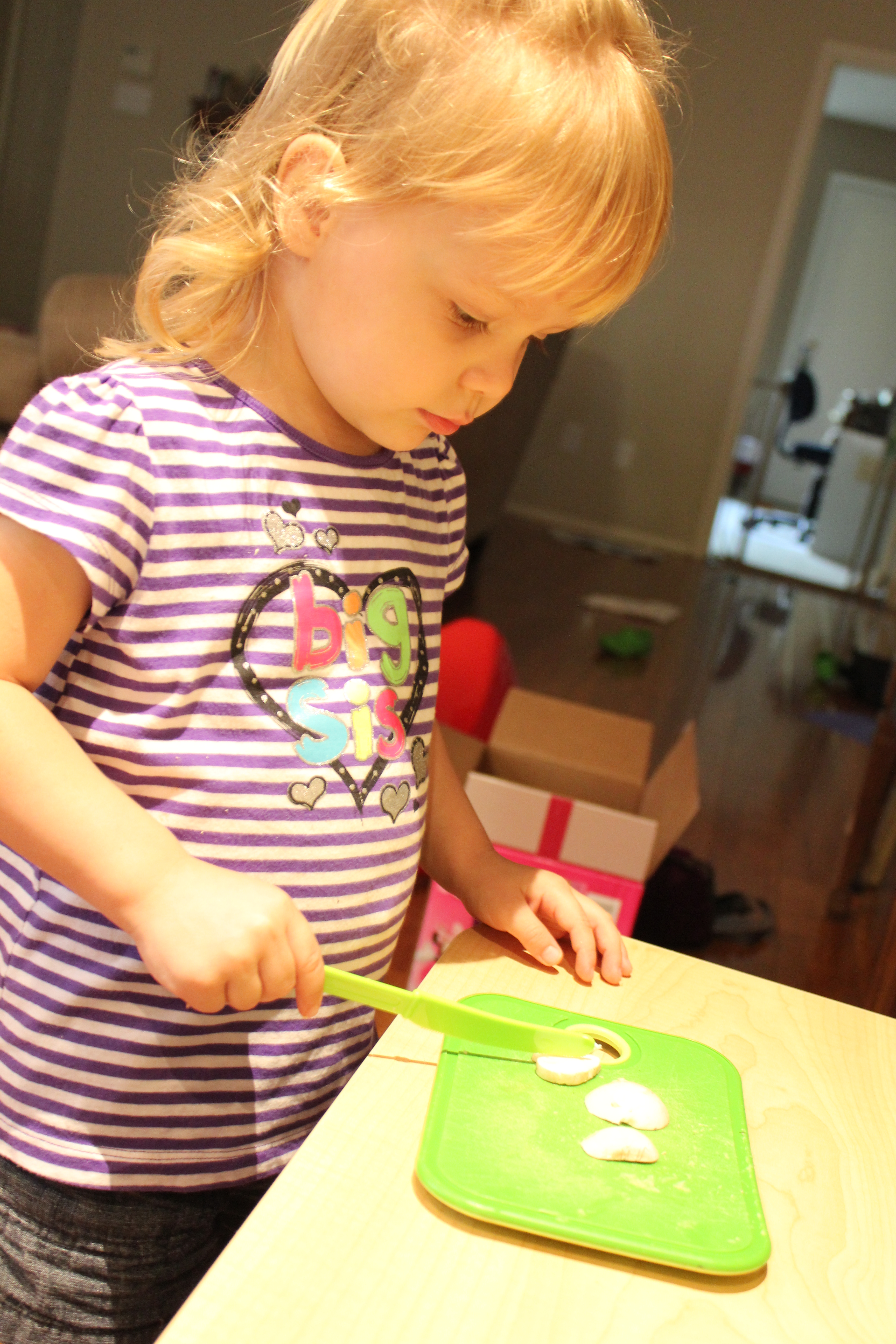
Another meal this week was a steak and mushroom stir-fry with a ginger soy sauce. Just used onions from our CSA box, but I had to take this picture of Hannah helping me cook. She helped me wipe off the mushrooms, then I set her up with this little cutting board and a plastic knife. It wasn’t sharp enough to actually cut anything, but she loved this!

The beets – I roasted them the last two times so I wanted to do something different this week. I roasted them whole, pureed them, and did a beet risotto. I’m finding risotto is like stir-fry or quesadillas – you can throw anything random in it.

It definitely wins the colorful award for the week. I topped it with some baked kale chips (a whole-family favorite). There were some leftovers which I served with some roasted chicken the next night. Really good together.

Doula

One of the advantages to starting this pregnancy thing a little later in the game (wow, 29!) is that I’ve gotten to see most of my friends go through this process two or three times already. I’m fortunate to have several friends with similar birth philosophies who pursued natural deliveries, and I get to learn from them.

Several of these friends credited doulas with their positive natural birth experiences. Some of my readers may not know what a doula is, and a few years ago I didn’t either. After talking to a lot of people, Brett and I have decided to have a doula at this baby’s birth. So I wanted to share what we’ve been learning.

Doula comes from the Greek word meaning “helper” or “a woman who serves.” Now, it is the term for a woman who is experienced and trained in providing emotional and physical support during pregnancy and birth. Women who use doulas statistically require fewer interventions during birth and report greater satisfaction of their birth experiences.

Today, natural births are a small minority in the US. Hospitals are not used to supporting women who desire to have a natural birth and generally push medical interventions that are now deemed standard. I’m a big fan of medical intervention when there’s some sort of actual medical emergency, but I don’t think those things should be standard for a normal, healthy pregnancy and delivery. A doula is an extra support person, someone else on your team with your husband to provide knowledge, encouragement and experience to help you labor according to your birth plan.

A doula is not a substitute for the husband or a medical professional. She will not be delivering the baby. She might help with labor positions, provide massages, create a calming environment, and possibly keep you from killing your husband. ;) Or so I’ve heard.

With my obstetrics group, I know the doctors and midwives we will be working with are very supportive of pursuing a natural birth, but we thought it would be helpful to also have someone who would be in the room with us for the entire labor process. Our doula’s name is Lindsey, and her website is very informative. She is a certified doula who has attended over 50 births, and we are excited to work with her. We’re learning as we go, and I’ll be sharing along the way.

Halfway through

20 weeks! Woohoo! We had an appointment and ultrasound this week. They said everything looked good. Here are a few shots.

This is looking “up” at the underside of her arm and hand. Her belly is on the left, and you might be able to see her chin and nose to the right of that.

When the technician was trying to look at her face, Baby Girl pulled this move:

Yep, those are her arms up in front of her face. I guess she was being camera-shy, silly alien skeleton baby. :) Both the ultrasound tech and the midwife commented on her great fingers.

Here’s a baby bump pic for your curiosity. It was taken right after I got home from ballet class, so that’s why I look tired and am dressed weird.

Definitely looking and feeling pregnant now. And this Baby Girl seems to like to move a lot. Her feet are already an inch and a half long, and I’m feeling them. :)

20 weeks to go!

CSA box #2

This week we got beets, carrots, fennel, kohlrabi, onions, basil, kale, chard and a salad mix. Two of these were completely new to me: fennel and kohlrabi. I’ve heard fennel tastes like licorice, and I’m not a licorice fan, so I was not optimistic. And kohlrabi? What the heck?

Luckily, our CSA provider posts a lot of recipes for the weekly ingredients, and I found one for Roasted Root Veggies that used the beets, carrots, fennel, kohlrabi and onions. I modified it slightly and ended up burning the beets. Oooops. Anyway, the finished product was pretty tasty (once you took all the beets out).

Someone snuck her finger in the picture, silly girl. I’m not sure how I feel about kohlrabi. It’s rather bland-tasting, but some of the pieces had a very woody texture that was inedible. I’m not sure if we got a weird one or if some are just like that. The fennel was not as bad as I expected; with the other vegetables it added some good flavor. Hannah just picked out the carrots and declared they were tasty.

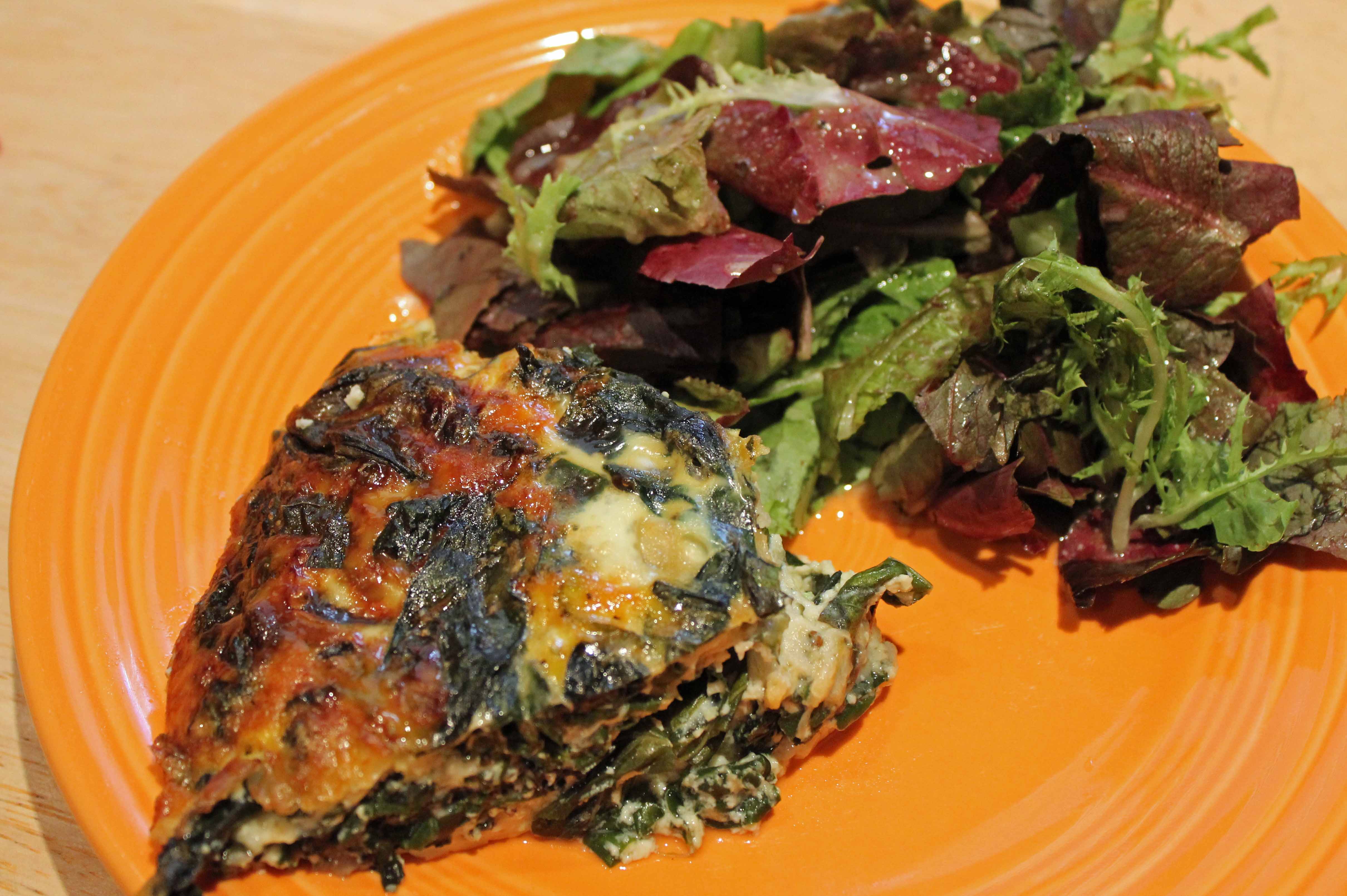
The chard went into a Crustless Chard Quiche (sans bacon). I served it with the salad mix. This was probably Brett’s favorite of the week, and I’ll definitely be making it again! Hannah ate a few bites.

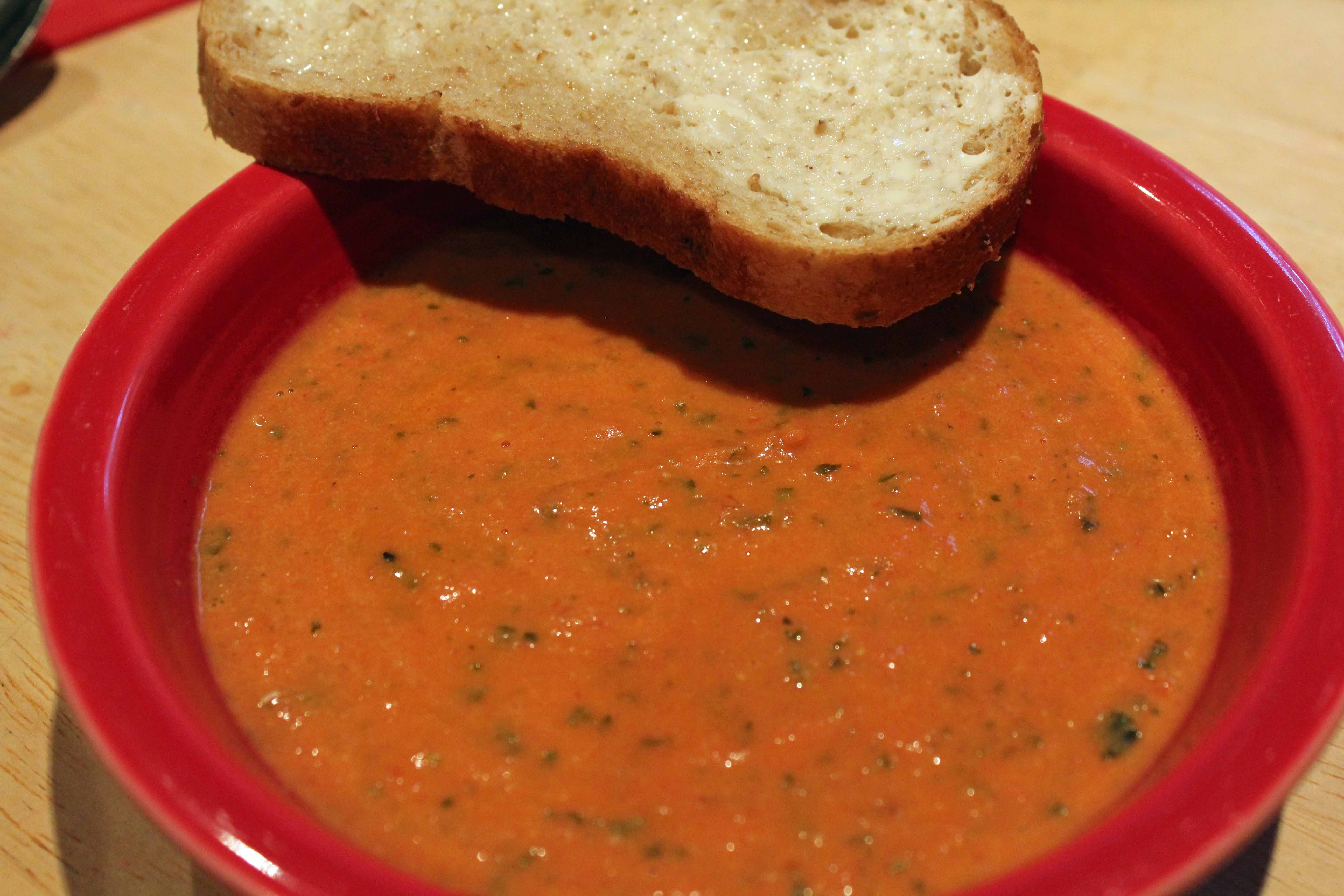
Also on the menu this week was a creamy basil-tomato soup (made-up recipe). Neither Brett nor I really like tomato soup, but we liked this!

Immersion blender = love! I used the basil in this obviously and also snuck in some kale for a nutrition boost. Hannah liked this, too.

Some CSA onions and carrots went into this Crockpot Coconut Chicken Curry. I followed the advise of another blogger and only used half the chicken and subbed potatoes and carrots to up the veggie factor – more economical and actually more authentic. I didn’t get a picture of this, but it was really tasty. The adventures continue!