Dinner tonight – Chili dogs

It’s a winter picnic. Chili dogs, potato salad and brussels sprouts (like winter coleslaw?). We had our favorite Hebrew National hot dogs covered in vegetarian chili. For the potato salad, I did “baked” potatoes in the microwave, let them cool, peeled and sliced them, then tossed them with mayo (we get the olive oil kind), sour cream, green onions and some spices.

The chili is an easy way to stretch a pack of hot dogs. When one hot dog may not usually fill you up, one hot dog (on a wheat bun) under a mound of chili will probably do the trick.

Vegetarian Chili

  • 2 c. pinto beans (or one can)
  • 2 c. black beans (or one can)
  • half a jar of salsa
  • 2 Tbs. chili powder
  • 1 Tbs. cumin
  • 1 14 oz. can tomato sauce

Everything goes in the Crock Pot for several hours. The end. Super easy. Healthy, too, except I put some nacho cheese on the top. I did get Newman’s Own “All Natural” nacho cheese, but sorry, Paul, that stuff is not exactly health food. (by the way, “all natural” is an unregulated marketing term that can basically be slapped on any product, including ones with high fructose corn syrup, but that’s a post for another time)

For the brussels sprouts I tried this recipe entitled The Very Best Brussels Sprouts Ever. How could I not try it with a title like that? It was really easy and seriously good. I don’t know if they’re the best; I think they’re tied with roasting. The recipe says 4-5 hours on low, but they were done after 2 1/2 and got a little mushy, so if you try it (and you should!) cut the cooking time way down.

And that was dinner!

Why we eat what we eat (WWEWWE)

When my generation of women walked away from the kitchen we were escorted down that path by a profiteering industry that knew a tired, vulnerable marketing target when they saw it. ‘Hey, ladies,’ it said to us, ‘go ahead, get liberated. We’ll take care of dinner.’ They threw open the door and we walked into a nutritional crisis and genuinely toxic food supply. . . . But a devil of a bargain it has turned out to be in terms of daily life. We gave up the aroma of warm bread rising, the measured pace of nurturing routines, the creative task of molding our families’ tastes and zest for life; we received in exchange the minivan and the Lunchable.

Now I don’t make my own bread (yet) and I have honestly embraced the minivan, but I heartily agree that women made a destructive choice to punt the kitchen duties in favor of convenience and “progressiveness.”

Lest anyone think this is some sort of ultra-conservative, repressed, homemaking drivel, the quote above is actually from author Barbara Kingsolver who happens to be a liberal, feminist atheist.

In the past few years, we developed a personal family food plan based on our priorities, and when I started clicking around to blogs, I found others that shared this foodstyle, and they called it “Real Food.” Basically, this means “whole foods” – foods that grow and occur naturally and can be bought in their original form or as close as possible. This eliminates most processed foods, things with artificial sweeteners, most preservatives, and ingredients that were created in a laboratory.

Real foods take a little more preparation time since you are starting with the actual ingredients instead of a processed head-start from a box. Homemade macaroni and cheese takes about 45 minutes for me to make, the stuff in the blue box takes around 15. But I can tell you exactly what’s in mine, and I can’t pronounce a lot of things on the box (though I can pronounce Yellow 6). Oh yeah, and mine tastes better.

I certainly do not proclaim myself any kind of food expert or nutritionist, but in some following posts I’ll outline several of our intentional food goals and what that looks like on a practical level. I’m also going to have some guest posts by my awesome mom who shaped the way I look at food.

In July, Brett and I will be attending a conference in San Antonio entitled “The Reformation of Food and the Family.” We are excited to learn more about food choices and hospitality in the context of a Christian family. So I’ve got food on the brain! Stay tuned for more of Why We Eat What We Eat (WWEWWE) and more food topics in the next month.

Christmas catch-up

Haven’t blogged a lot lately, probably because I’ve been sitting around doing nothing. Not exactly! This is holiday week – Christmas Eve, Christmas, New Year’s Eve, my Birthday, New Year’s Day and our anniversary.

To summarize, our normal activities were off for the last couple of weeks, but we got new front windows, re-financed our house (woohoo for low interest rates!), had Brett’s parents come visit, had several playdates and visited with friends in from out of town. Oh yeah, and all the holiday stuff. Fortunately, Brett had two four-day weekends for us to enjoy a lot of family time.

I tried out a couple new recipes for Christmas dinner: bacon-wrapped pork tenderloin and from-scratch green bean casserole. Only a couple tweaks to the recipes – I marinaded the pork in Dijon and apple juice for a little bit before cooking, would do even longer next time. For the green beans, I put those delectable fried onions on top instead of panko.

I also did some ranch mashed potatoes and rolls from a tube. It was a tasty meal. I didn’t want to get too crazy since we’d thrown a curveball and introduced my in-laws to tamales the night before (which they liked).

Now we have to get motivated to take all the Christmas decorations down. We seem to be rampantly blowing fuses in our Christmas tree; each day a new branch or section is completely out. Eh, we’ll deal with that next year.

Dinner tonight: Brussels sprouts hash

It’s finally brussels sprouts season again! I know, “brussels sprouts” looks weird, but that’s the proper spelling. I usually just say it as one word to be correct while also not sounding weird – brusselsprouts. Anyway, we are seriously excited. We just like the way they taste, and they’re a great source of Vitamin C and other good stuff.

We hadn’t seen any at the farmer’s market yet, so I went ahead a picked up a big bag at Costco for a great price. I roasted half and went looking for a new recipe for the other half. The Hashed Brussels Sprouts with Lemon at Simply Recipes gave me an idea. “Hash” seems like a great way to use up all kinds of random things. I happened to have some potatoes and bacon – sounded like a good combo.

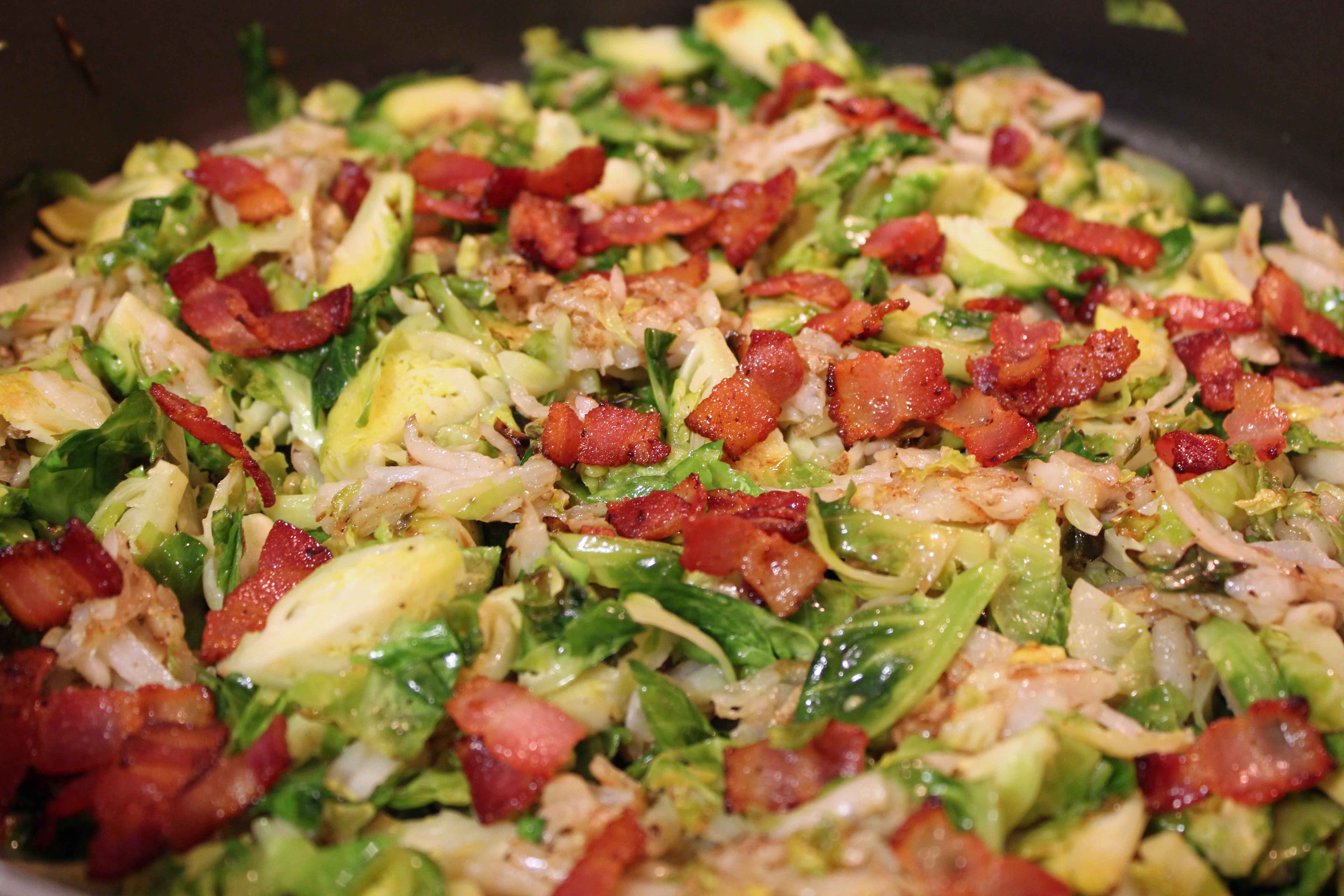
So here’s my brussels sprouts, potato and bacon hash. I started by cooking 4 sliced strips of bacon then removed them, leaving the yummy bacon drippings in the pan. Then I shredded 2 small (unpeeled) potatoes and started cooking them in the delicious bacon juice. I finely sliced 1 lb. brussels sprouts and tossed them in with the potatoes. I added a little salt and pepper and just waited for them to all be cooked through. Before serving, I sprinkled in the bacon. We ate the whole pan. No kidding.

If you are convinced you don’t like brussels sprouts, try something new with them. This hash was delicious (of course, cooked in bacon!), but I also highly recommend roasting them. There are lots of recipes online, so do a search, find one you’re comfortable with, and give it a shot! And with the winter crud starting, we could all use a little extra Vitamin C.

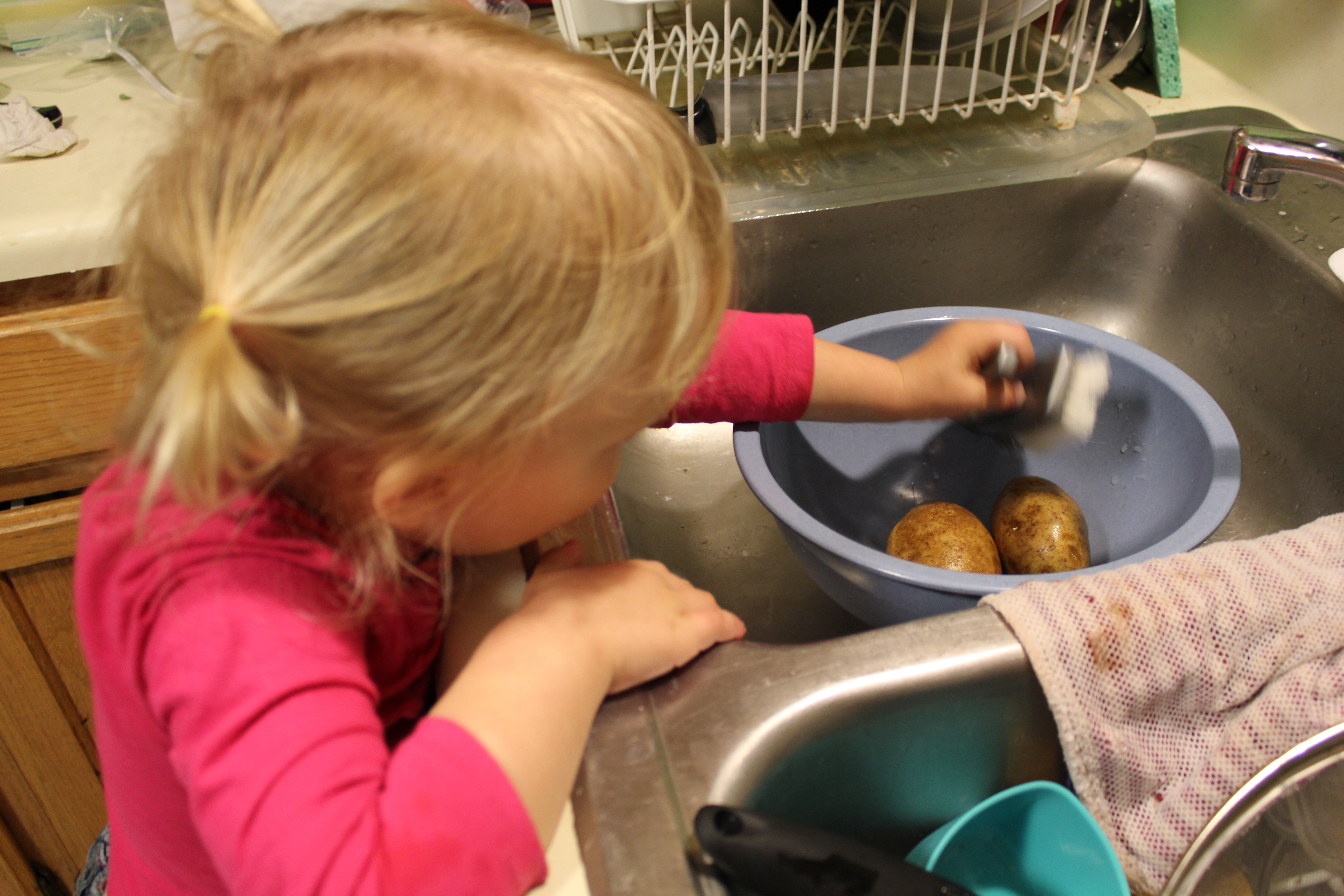
Here’s Hannah helping me wash the potatoes.

Dinner tonight: Ropa Vieja Stew

This is not your grandmother’s pot roast. Unless your grandmother was Cuban. “Ropa vieja” basically translates as “old clothes,” implying this is what you could do with some leftovers.

Easy Ropa Vieja Stew

  • 2 lbs. boneless beef chuck roast, cut in half
  • 2 Tbps. olive oil
  • 2 large onions, coarsely chopped
  • 2 large green peppers, coarsely chopped
  • 4 jalapeño peppers, seeded and minced
  • 1 habanero pepper, seeded and minced
  • 3 cans (14.5 oz each) diced tomatoes, undrained
  • 1/2 cup water
  • 6 garlic cloves, minced
  • 2 Tbsp. minced fresh cilantro
  • 4 tsp. beef bouillon granules
  • 2 tsp. pepper
  • 1 1/2 tsp. ground cumin
  • 1 tsp. dried oregano
  • 1/2 cup pimiento-stuffed olives, coarsely chopped
  • Hot cooked rice

1. In a large skillet, brown beef in oil on all sides. Transfer meat to a 5-qt slow cooker. Add onions and peppers. Combine tomatoes, water, garlic, cilantro, beef bouillon, pepper, cumin and oregano; pour over vegetables.

2. Cover and cook on low for 6-8 hours or until meat is tender. Remove beef; cool slightly. Skim fat from cooking juices; stir in olives. Shred beef with two forks and return to slow cooker; heat through. Serve with rice if desired.

This recipe is from the Taste of Home magazine. I made a couple changes – first, I didn’t cut the roast in half and brown it in oil, I just put it straight in the slow cooker. I also didn’t use green peppers, and I skipped the habanero in favor of some extra jalapeños. I probably should have done the habanero because it didn’t turn out spicy at all and could have used a little extra heat. I also didn’t use the bouillon because I didn’t have any, and I think it was fine.

Everyone liked it, including Hannah. Instead of serving hers on rice, I put it in a tortilla and told her it was a taco. She’ll pretty much eat anything if you tell her it’s a taco.

How I freeze stuff

I declared that I am not cooking this week. But there is still a little work in turning giant ice cubes of soup into an edible meal. How I thaw and reheat my frozen food depends on how I froze it to begin with.

Some foods, I make and freeze in bulk. These are usually single-ingredient items such as chicken stock and beans. I freeze the chicken stock in plastic containers which I can thaw in the fridge on the day I need them. I do the beans in freezer bags and freeze them flat so they stack nicely and are easy to find.

For baked meals such as casseroles or enchiladas, I purposely originally cook them in a foil-lined metal pan. After cooking, I put in the fridge for a while to cool, then put the entire pan in the freezer. When it is completely frozen, I pull the foil (and food) out of the pan, wrap it in more foil, then put it in a gallon freezer bag. This is much easier than trying to freeze an actual pan, and they stack nicely as well.

When I want to eat one of these, I put it in the fridge the day before to thaw. Then I just put it in a pan and reheat it in my toaster oven. You could probably bake it from frozen, but that would take some serious time in the oven.

For large amounts of soup (no picture), I use a gallon freezer bag. The day I want to eat it, I thaw it in the fridge for a few hours so it will come out of the bag easier. Then I put it in the CrockPot or reheat it on the stove.

I like to freeze smaller amounts of leftovers for Brett to take for lunch. Many items like soup, I put in a plastic container. I recently made some burritos and then individually wrapped them in foil.

They’ll thaw slightly in his lunchbox and he can just throw them in the microwave at lunch.

There are awesome freezer-cooking gurus who have super-organized freezers with bins and labels and tracking sheets. That’s not me, but hopefully I’ll be able to develop a system better than, “Just throw it in there.” Recently, Brett wanted to take a burrito for lunch but couldn’t find them. So freezer organization is on my long-term to-do list. Or if anyone wants to come do it for me … I’ll trade you some frozen meals! :)

Thankful for the freezer

I’m taking the week off cooking. I truly enjoy making meals, but it’s a really crazy week – scheduled activities each day plus I’ll be gone two evenings doing fun stuff with friends.

So I’m not cooking. I looked in my freezer and calculated that my stockpile of meals will keep us well-fed for a week with little more effort than thawing and re-heating. Some of the stuff has been in the freezer for a while anyway and needs to get eaten.

Our menu:

I’ll just get some salad and bread to go with the pasta and soup, and we’ll be good! That’ll be great for the grocery budget this week, too. I like to freeze recipes that can be a complete meal in themselves like soup or casseroles that have protein and veggies. And all these meals were made from scratch, taking only a little extra time weeks/months ago to prepare.

So this busy week I am thankful for my freezer – it’s putting something on the plates so I can take something off mine.

Dinner tonight – Turkey

Turkey breasts were on sale this week, so I thought I’d get us in the Thanksgiving spirit and have some early bird.

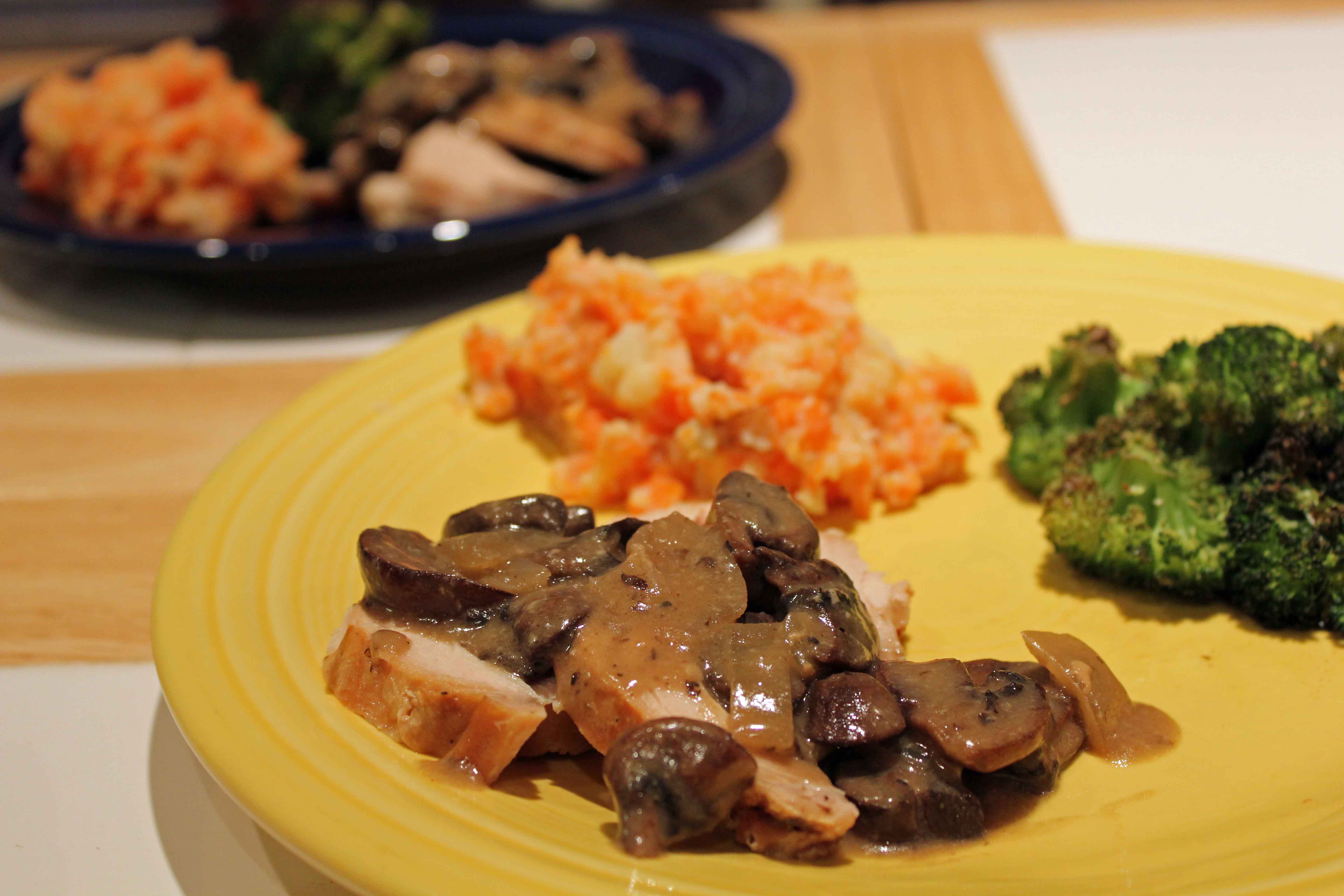
My meal:

This may look like a big, time-consuming meal, but I planned ahead to get everything done. The only work for the turkey was at 9am, then it was doing its own thing all day. I made the cake and mashed potatoes while Hannah was napping. I also used the bagged pre-cut broccoli florets and pre-sliced portobello mushrooms (both on sale) which cut down prep time.

The slow cooker turkey recipe was so easy! I ended up overcooking it a bit, but with the gravy it was delicious. Brett didn’t talk for a while, he just made happy eating noises.

Our lives were changed when we discovered roasted broccoli, and we eat ridiculous amounts of it. And it’s really easy – just coat florets in olive oil and salt and pepper. Put on baking sheet and roast for 20ish minutes at 450ish degrees. Crazy good.

I made up the carrot and potato mash. I cooked the carrots then I cooked the potatoes then I mashed them up with some butter and milk. They were very flavorful, and the carrots give a major health boost to normal mashed potatoes.

Hannah is not eating broccoli or mashed potatoes at the moment, but she tried everything and liked the turkey. There was a wishbone in the turkey breast, so we taught her what to do with it.

I think she got the good end.

Dinner tonight – Butternut squash risotto

Brett loves squash. Especially “weird” ones: acorn squash, spaghetti squash and butternut squash. Since these are winter squashes, they’re in season and will be making more appearances on our menu, to his great pleasure.

There’s a small booth at the farmer’s market run by an Anabaptist family that we usually turn to for huge bunches of basil for only $2 and gorgeous, delicious Armenian cucumbers. We picked up a butternut squash from them this week, and I started the hunt for a new recipe to try. I found some arborio rice in the pantry that I needed to use up, so I narrowed my search to Butternut Squash Risotto.

I followed the recipe from Simply Recipes and just made a small change after reading the comments. Instead of sautéing the diced butternut squash at the beginning, I roasted the whole squash ahead of time. Then I diced half and pureed half. I added the diced squash right when I was finishing the onions, and I added the puree at the end with the butter and parmesan. I think this made for great flavor and consistency.

This satisfied Brett’s butternut squash craving. I liked it because it wasn’t overly-sweet or overly-spiced like many butternut squash recipes. And Hannah liked it, too! She called it “Quash Sotto.” Served with some whole wheat sourdough (also from the farmer’s market), it was a really tasty meal.

Dealing with the hard, tough-skinned squash can be the hardest part of a butternut squash recipe. They are renowned for being difficult to deal with. I took some advice I found online and cut the squash in half lengthwise, skin still on, scraped out the seeds and roasted it. After it cooled, I peeled and diced it. Really easy!

If you have a favorite butternut squash recipe, please post in the comments below. I’d love new ideas for this healthy, seasonal ingredient.

Dinner tonight – Okra gumbo

Fall brings a smaller selection at the Farmer’s Market. Last week, we picked up what was available and I planned our week’s menu based on what we came home with: butternut squash, apples, zucchini, mushrooms and okra. These ingredients turned into:

  • baked pasta with mushroom sauce
  • Greek zucchini (recipe clipped by Grandma Ava) with quinoa
  • butternut squash risotto
  • gumbo with brown rice

I’d never made gumbo before, but I figured it would be a good way to use up a large amount of okra. As with most new things I want to try, I looked up at least five recipes online to get an idea about ingredients and cooking methods. Then I made something up with considerations of my budget and what I had on hand.

Slow Cooker Gumbo

  • 1 onion, chopped
  • 2 cloves garlic, chopped
  • 1 lb. smoked sausage, sliced
  • 1 28 oz. can crushed tomatoes
  • 2 1/2 c. chicken stock
  • salt, pepper and cayenne to taste
  • 1 lb. okra, sliced

Put all ingredients except okra in slow cooker and mix. Cook on High 3 hours or Low 6 hours. After that cooking time, slice okra and put in a microwave-safe bowl, cover and cook in the microwave for 2 minutes. Add to slow cooker and cook for an additional hour. Also within the final hour, add some cooked rice (leftovers would work great).

I certainly don’t claim that this is an authentic recipe, but it ended up being an affordable, filling soup and a tasty way to use some okra. I think sliced okra is such a happy food; it looks like a star or a flower, that’s just fun!

A “pop”-ular snack

I got in a rut with snack time. Mostly, I was rotating goldfish, raisins and some form of dry cereal. Sometimes, I’d get really crazy and combine all three in a sort of party mix.

Then my friend Meghan showed me how make popcorn, and we are big fans of how cheap, easy and healthy it is. We often have popcorn parties when we get together.

Cheap – I buy organic popcorn kernels from the bulk bins for super cheap, and even just a pound ($1.69) can last a long time. A bag of microwave popcorn (nonorganic) runs around 54 cents, but I can make the same amount for 33 cents. That’s over a 40% savings. Easy – Once I got the process down, it only takes me six minutes and not much effort to have popcorn in our bowls. Healthy – Popcorn is a whole grain, and has fiber, protein and antioxidants. By making it myself instead of using a microwave bag, I’m saving a lot of fat and calories and skipping ingredients like hydrogenated oils, artificial flavorings and too much salt. And by buying organic, I’m avoiding GMO corn.

And did I mention it’s just fun? Hannah loves to help listen for the pops. She and Cody can put down a lot of popcorn. We usually just make it with a little salt, no butter.

Stovetop Popcorn

  • 1 T. canola oil
  • 1/4 c. popcorn kernels
  • salt (optional)
  • melted butter (optional)

Put oil in a large pot over medium heat. Add four kernels to oil. When all four kernels have popped, you know the oil is a good temperature. Add the rest of the kernels and some salt if desired. Put the lid on the pot and shake vigorously (holding lid on) so that kernels are coated evenly in oil. Put back on heat. Shake every 10-15 seconds to keep kernels from burning. When pops have slowed to 1 every 5 seconds, turn off heat. Add melted butter if desired and shake again. Ready to eat!